


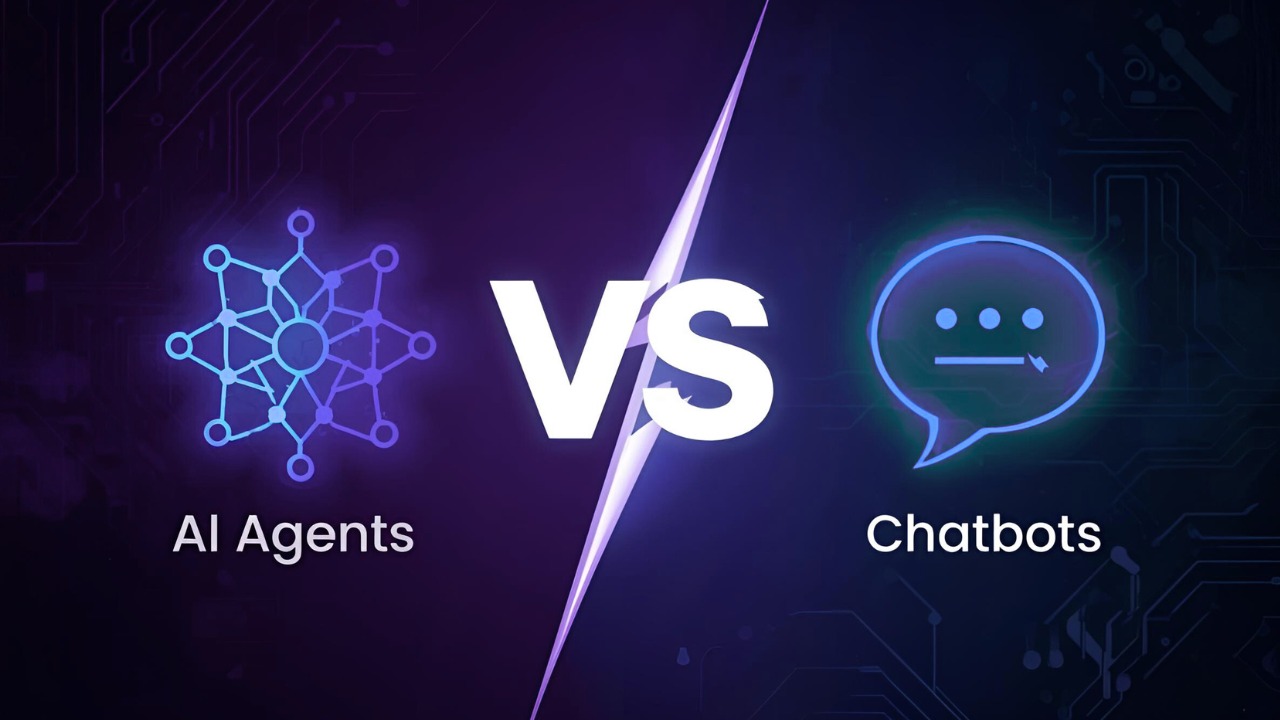

The world of artificial intelligence is moving incredibly fast. It feels like just yesterday we were getting used to basic chatbots answering our questions on websites. Now, the conversation has shifted to something far more powerful: AI agents. But what’s the real difference between an AI agent and a chatbot, especially as we look towards 2025?
This isn’t just a technical debate for developers. For any business thinking about automation, understanding this distinction is crucial. It’s the difference between giving a customer a simple, pre-written answer and having a system that can solve their problem from start to finish.
At Empathy Technologies, we focus on building intelligent, human-like systems, and we believe AI agents are the future of business automation. This guide will walk you through everything you need to know.
What is a Chatbot?
A chatbot is a computer program designed to simulate a human conversation through text or voice. Think of it as a friendly digital assistant that follows a script.
Most chatbots work in one of two ways:
- Rule-based: These bots follow a strict set of predefined rules and decision trees. If you ask a question they’ve been programmed for, you’ll get a perfect answer. If not, they often get stuck.
- NLP-driven: More advanced chatbots use Natural Language Processing (NLP) to understand the intent behind your words, making the conversation feel a little more natural.
You’ve probably encountered them many times. Common examples include the pop-up bot on a website answering FAQs, a WhatsApp bot checking your order status, or a simple system for booking appointments.
The main limitation? Chatbots are reactive. They can’t think for themselves or handle tasks outside their pre-written scripts. They lack deep contextual understanding and have no real autonomy.
What is an AI Agent?
An AI agent is a different beast altogether. Think of it as an autonomous system that can perceive its environment, make decisions, learn, and act on your behalf to achieve a specific goal. It doesn’t just chat; it does.
An AI agent is built on more advanced components:
- Memory: It remembers past interactions and user history to inform future conversations and actions.
- Reasoning Engine: It can analyse data, spot patterns, and make evidence-based decisions.
- Contextual Awareness: It understands the bigger picture and can handle complex, multi-step tasks.
Great examples include Microsoft 365 Copilot, which helps you create documents and analyse data, or advanced customer support agents that can process a refund from start to finish without human help. The key advantage is that AI agents are proactive, goal-oriented, and can learn and adapt over time.
Learn: What Is Agentic AI: The Complete Guide of 2025
AI Agent vs Chatbot: A Feature-by-Feature Comparison
Let’s break down the key differences in a simple table.
| Feature | Chatbot | AI Agent |
|---|---|---|
| Learning Ability | Rule-based or limited learning that requires manual updates. | Self-learning and adaptive, continuously improving from feedback. |
| Context Awareness | Low. Often forgets the conversation from one session to the next. | High. Maintains short- and long-term memory for context-rich interactions. |
| Autonomy | Reactive. Only responds when prompted and follows a script. | Proactive and autonomous. Can initiate tasks and make decisions to achieve goals. |
| Task Handling | Single-purpose, handling simple and repetitive queries. | Can manage complex, multi-step workflows across different systems. |
| Data Source Integration | Limited. Usually pulls static data from a single source like a helpdesk. | Enterprise-wide. Integrates deeply with multiple tools and APIs (e.g., CRM, ERP). |
| Human-like Interaction | Scripted and can feel robotic, struggling with unexpected questions. | Natural and contextual, capable of nuanced conversations. |
Real-World Use Cases in 2025
So, how does this play out in the real world?
Chatbot Use Cases:
- Answering FAQs: Instantly providing answers to common questions about business hours or shipping policies.
- Appointment Scheduling: Guiding users through a simple booking process.
- Basic Lead Qualification: Asking a few initial questions to see if a visitor is a potential customer.
AI Agent Use Cases:
- Automating Report Creation: An AI agent like Microsoft 365 Copilot can analyse sales data, generate a summary, and create a PowerPoint presentation automatically.
- Predictive Sales Support: A sales AI agent can analyse a customer’s behaviour, predict their intent to buy, and suggest the next best action for the sales team.
- End-to-End IT Support: Instead of just logging a ticket, an AI agent can diagnose an IT issue, access relevant systems, and resolve the problem autonomously.
The Technology Behind the Difference
The tools powering these systems are fundamentally different.
- Chatbots typically rely on simpler technology like decision trees and basic NLP for intent recognition.
- AI Agents are built on powerful Large Language Models (LLMs) like GPT-5, Claude, or Gemini. They use vector databases for memory and sophisticated reasoning engines to plan and execute tasks, often integrating with platforms like Microsoft Power Automate and Azure OpenAI.
At Empathy Technologies, our approach is to combine the power of AI Agents with enterprise-grade automation to create systems that don’t just talk, but deliver real business outcomes.
Debunking Common Myths
There’s a lot of confusion out there. Let’s clear some of it up.
- Myth 1: “Chatbots and AI Agents are the same.”
- False. As we’ve seen, chatbots are for simple conversations. AI agents are for complex, autonomous action.
- Myth 2: “AI Agents will always replace humans.”
- Misleading. The future is about augmentation, not replacement. Agents handle the repetitive, time-consuming tasks, freeing up your team to focus on strategy, creativity, and high-value human interaction.
- Myth 3: “AI Agents are too expensive for small businesses.”
- Not necessarily. While enterprise-grade systems can be a significant investment, the rise of platforms like Microsoft Copilot is making AI agent technology more accessible than ever. The key is to start with a clear business case and focus on ROI.
How to Choose What’s Right for You
So, which one do you need?
- Choose a Chatbot when: You need to handle simple, repetitive workflows, answer basic questions, and have a limited budget.
- Choose an AI Agent when: You need to automate complex, multi-step processes, require proactive decision-making, and want to provide a deeply personalised experience.
Empathy Technologies Tip: A great way to start is with a pilot project using a Copilot-based AI Agent. This allows you to test the technology and demonstrate value quickly without a massive upfront investment.
How Empathy Technologies Can Help
Ready to move beyond basic chatbots? We specialise in helping businesses harness the power of AI agents. We offer:
- AI Agent design and deployment.
- Chatbot modernisation and Copilot integration.
- Expertise in Microsoft 365 and Azure OpenAI.
- A tailored automation roadmap to guide your journey.
Frequently Asked Questions
What’s the biggest difference between a chatbot and an AI agent in 2025?
The biggest difference is autonomy. A chatbot follows a script, while an AI agent can independently think, plan, and execute multi-step tasks to achieve a goal.
Do AI Agents replace customer service teams?
No, they augment them. AI agents handle repetitive queries and tasks, freeing up human agents to focus on complex, high-empathy customer issues that require a human touch.
How secure are AI Agents compared to chatbots?
Security depends on the platform and implementation. Enterprise-grade AI agents built on platforms like Microsoft Azure often come with robust, built-in security and compliance features designed to protect sensitive data.
Can small businesses afford AI Agents?
Yes. While custom solutions can be expensive, the availability of platforms like Microsoft 365 Copilot is making AI agent technology more accessible. The key is to start with a clear use case that delivers a strong return on investment.
What industries benefit most from AI Agent automation?
Virtually all of them! From IT and customer service to sales, marketing, and finance, any industry with complex digital workflows can benefit from the efficiency and intelligence of AI agents.
Final Thoughts: The Next Wave of Automation
The evolution is clear: we are moving from scripted bots to truly intelligent AI agents. For businesses, this is more than just a new tech trend; it’s an opportunity to fundamentally reimagine how work gets done. By embracing AI-powered automation, you can unlock new levels of efficiency, enhance customer experiences, and gain a powerful competitive edge.
Ready to see what an AI Agent could do for your business? Talk to Empathy Technologies to transform your business with AI Agents in 2025.
- Schedule a Session: Booking Link
- Chat with Our Team: garry@empathy-technologies.com